


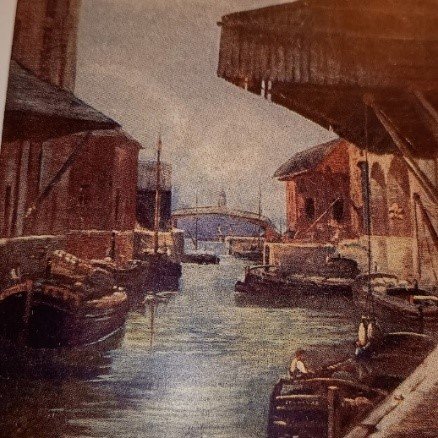

Where Worsley Met the Sea
The Bridgewater canal was a catalyst for the industrial revolution where handloom weavers and agricultural workers moved for better paid employment in Manchester’s new cotton mills.
The Bridgewater canal reached Runcorn in 1776, but did you know that for nearly 200 years, the Bridgewater canal was directly linked to the sea port of Liverpool via Runcorn?
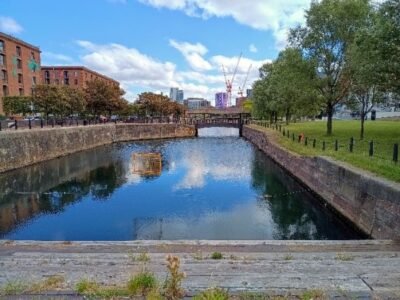
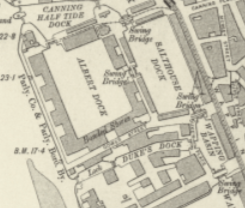
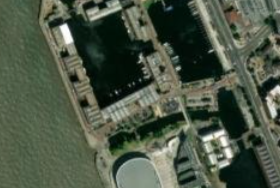
Today in the docks of Liverpool there is a small, landscaped water channel, not much wider than the Bridgewater Canal itself and unidentified except on maps as “Duke’s Dock.” Few of the 6 million annual visitors to its’ rather famous next-dock-neighbour the Royal Albert Dock will know about or even take notice of this small but powerful reminder of the importance of the Bridgewater canal in the fortunes of Manchester, Salford, Liverpool and points in between.
Liverpool had become a major player in maritime trade because the world’s first commercial enclosed wet dock system was opened there in 1715. Ships that had previously been moored in the Mersey being loaded and unloaded using smaller boats were also subject to the tide which meant that it would take several days and possibly weeks to be ready for going back to sea (and earning money again.) The enclosed wet dock protected the ships from the tides and allowed the goods to be unloaded and loaded utilising the side of the dock and in a matter of hours or a few days, maximising the earning potential of the ships and for their owners.
The Bridgewater canal had been extended to Runcorn by 1776 and the Duke had a flight of locks built to take the canal down to the river Mersey and had his dock built at Liverpool, thus enabling the reach of his canal by utilising the existing river and the world’s first enclosed wet dock system that was on its way to making Liverpool the second port of the British Empire.
Despite his status, building of the dock in Liverpool was not as simple and stress free as it sounds – the Duke was already selling his Worsley coal in Liverpool but with the stipulation that the poor people should be first served before the factories and their wealthy owners, so he did not have a good name with the leading citizens because of his popularity with the poor. Broadside ballads were written praising the Duke and ridiculing the tradesmen. Liverpool’s involvement in the ‘triangular’ slave trade with Africa and America was already making its leading citizens hypersensitive to criticism, so there was opposition to the Duke expanding his dock at Liverpool but expand it he did.
The Duke’s dock and the connection of the Bridgewater canal to the river Mersey via Runcorn also meant that raw cotton was cheaper and quicker to transport to Manchester by water and the finished cotton cloth would be returned to Liverpool the same way: the carrying of goods was three times more profitable than the coal carrying on the canal.
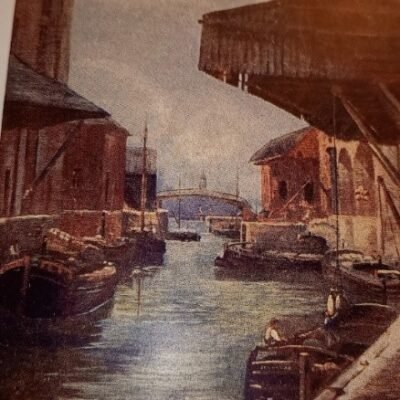
The warehouses on the Duke’s dock (see 1907 picture) was damaged by enemy bombing in the second world war and eventually the dock became disused by the 1960’s and all the buildings were demolished .
Part of the flight of locks linking the now Manchester Ship canal (created in 1894 from the rivers Mersey and Irwell) and the Bridgewater canal at Runcorn were built over starting in the late 1950’s as part of the slip road to the first Runcorn Bridge (also known as the Silver Jubilee bridge) and eventually all the locks were closed and backfilled, severing a link to Liverpool that had lasted for around 200 years.
There is a project to reopen this link between the Bridgewater canal and the Manchester ship canal at Runcorn: a distance of approximately 570 metres, using a combination of traditional locks and modern engineering. For more information about what I think is a super exciting project, visit their website: https://unlockruncorn.org/
Whenever I am guiding on the Bridgewater canal in Salford, it’s now great to know that I am linked to guiding in Liverpool’s famous dock area and vice versa.
Part of the study (and work once qualified) as a guide is to join the metaphorical dots between places they visit. I trust you have enjoyed joining these metaphorical dots between two of the ends of the Bridgewater canal – I know I have.
Elizabeth Charnley is a Bridgewater canal in Salford Green Badge guide and a Blue Badge guide for Liverpool city region.
To book Elizabeth for tours, illustrated talks and heritage/historical research, please call or text 07979232817 or email elizabeth.charnley63@btinternet.com